About
I Draw Paintings.
Art is a way of knowing oneself.
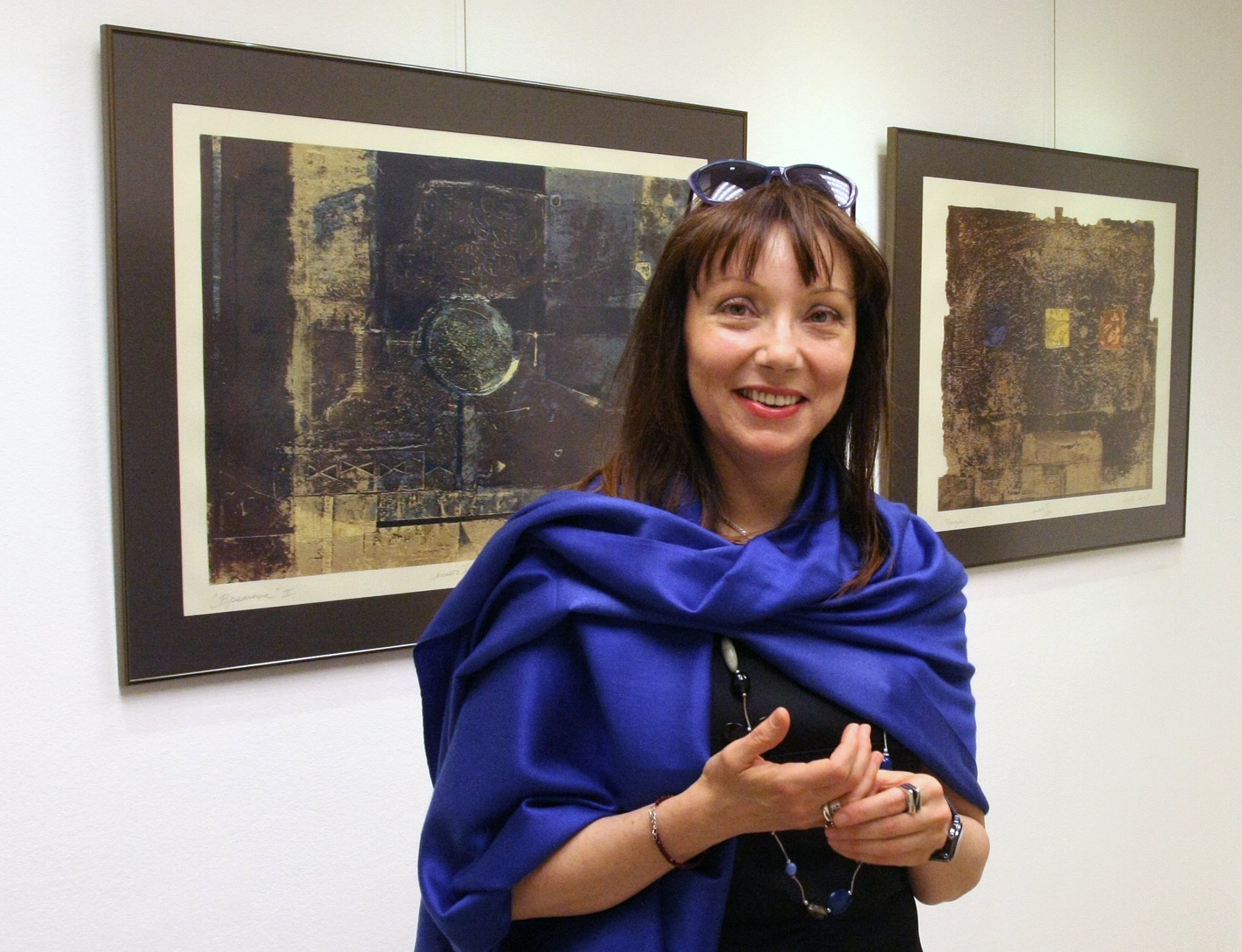
Artist statement
I begin with the words of Alvin Toffler: “The illiterate person of the twenty-first century will not be the one who cannot read and write, but the one who does not learn constantly.” To paraphrase: through drawing, the artist is constantly learning. This aim ennobles the artist’s efforts, but only the path gives them meaning—a path that inevitably passes through the desire to know oneself. These efforts seek a clear artistic answer: truthfulness. Truthfulness catches the vibrations of the spirit beyond material distinctness. If I must clarify my position further from today’s perspective, I claim the right to be humbled by the greatness of Nature, and I place my efforts within her realm—the realm of “spiritual” nature and its abundance of forms. Nature is an immeasurable teacher of beauty. Primordial femininity, as a gift of nature, is an eternal provocation for me. This harmony is strong and real. It lies beyond the currents of time, which wash over us with their advertised, aestheticized, false “beauty”—fashionably current, yet volatile and transitory. By nature, I am curious and “tempted” by various materials: pigments, oil and acrylic paints, color lithography, watercolors, Plexiglas, and others. Their specific qualities help me express my ideas more clearly on canvas, paper, and transparent surfaces. Different concepts provoke new realizations in my work. Recognizable images—naked bodies, mandalas, bridges, chains, roots, and others—tell a personal narrative. Colors, planes, lines, and the rhythm of forms create meaningful connections within the paintings through surrealistic coloration. I wish to give my work a modern plastic sensibility with new, productive meaning. Recognizability bridges the abyss between a prototype and an artistic image. I often ask myself about the autonomy of art today. Images are everywhere, aggressively oversaturating the aesthetic sphere of human perception; the unspoken understanding between humanity and Nature seems to lose its strength. Harmony steps aside to make room for chaos. The artist is submerged in a plurality of personal positions, sociocultural traditions, philosophical paradigms, and utopian perspectives, yet feels increasingly psychologically dissociated. Thus, electronically generated reality not only adds to but also replaces the traditional materiality of goods and materials, drawing the individual into the insidious current of virtually realized desires. Modern thought desacralizes the image. In this sense, the unified figures inhabiting the spaces of the paintings express the loneliness of the individual today. Here, I think, I must move beyond the tension between the constancy of personal taste and the persistence of external coercion. Connections built in different contexts intertwine as situational puzzles. The plastic field of the paintings is inhabited by allusions to real objects, integrated in a personal way. Yet the question—art for the public or art for the author—will always remain current. I would add another: where are the boundaries of artistic identity, or has that identity become submerged in new psychological “realities” constructed by the author? It seems to me that the author’s natural critical reflection seeks support in a psychological reading of phenomena in art. The ideas reach toward the transcendental boundlessness beyond the terrain of “familiar” visible reality, yet remain a testimony to the time in which they arise, with a gaze directed inward and beyond.